Current issue

Author:Wei Wei*
Abstract:
Phytoplasmas are minute, cell wall-less bacteria responsible for devastating plant diseases, leading to significant economic loss in agriculture. This article explores recent advancements in phytoplasma research, focusing on pathogenesis, taxonomy, and diagnostics through top-down and bottom-up approaches. Top-down multi-omics studies have provided a system-level understanding of phytoplasma-induced disruptions, particularly in sugar metabolism and hormone signaling, revealing their extensive impact on plant physiology. Complementing this, bottom-up strategies have dissected molecular interactions, elucidating how phytoplasmas derail meristem fate, modulate plant growth patterns, alter plant architecture, and induce characteristic symptoms. Advances in taxonomy and classification have improved species differentiation, integrating 16S rRNA sequencing, multilocus sequence typing (MLST), and whole-genome sequencing (WGS), with database-guided tools refining classification accuracy. The development of cutting-edge diagnostic technologies, such as clustered regularly interspaced short palindromic repeats-based (CRISPR-based) detection, has significantly enhanced the sensitivity, specificity, and efficiency of phytoplasma identification and surveillance. Additionally, the integration of big data analytics and AI-driven models has pioneered image-based symptom recognition, supporting disease surveillance and monitoring.
Key words:Meristem fate derailment, iPhyClassifier, Artificial intelligence (AI), Omics, Floral transition
Download: PDF Links
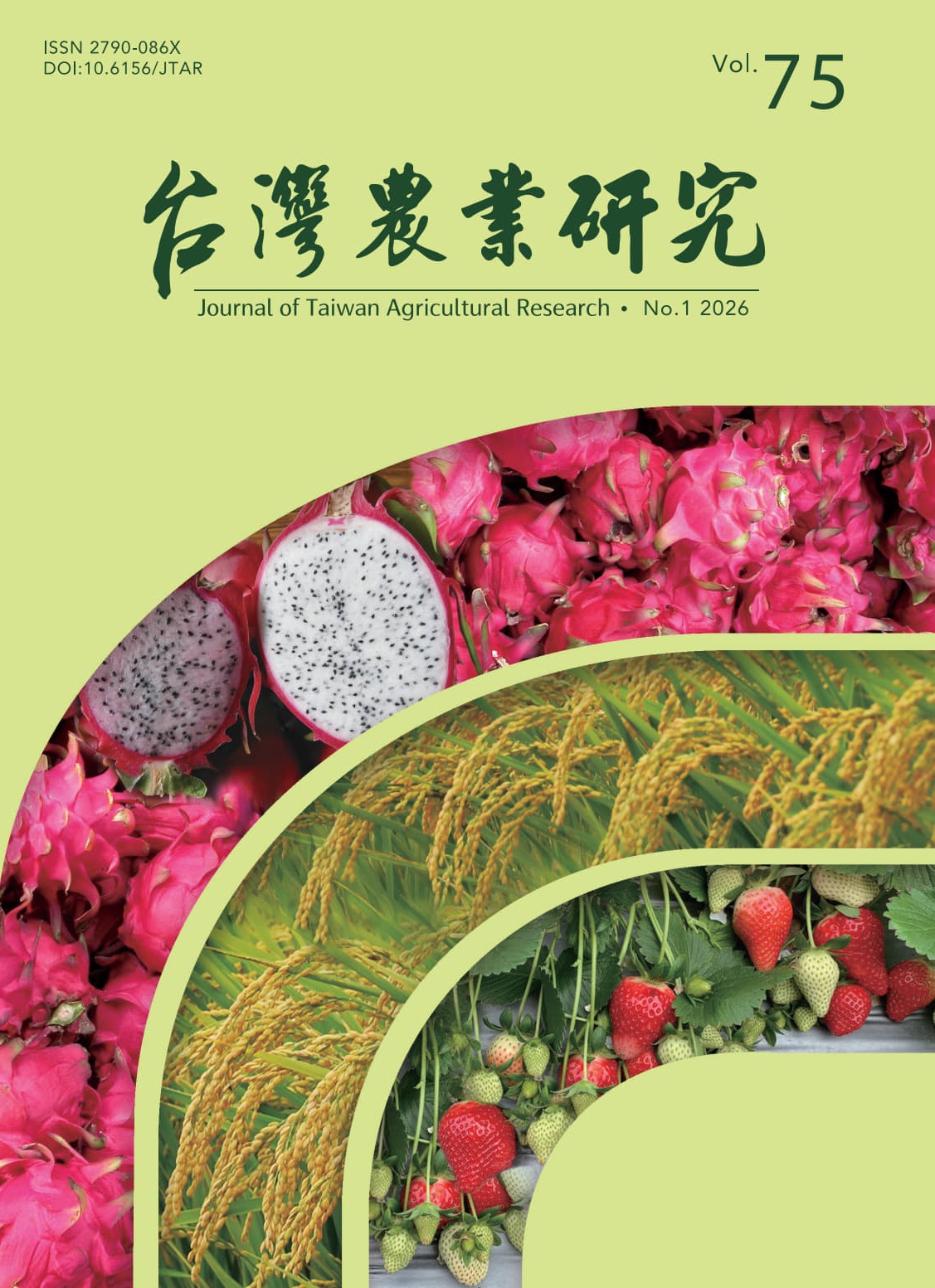
Taiwan Agricultural Research
 ISSN: 2790-086X
Vol. 75, No.1 (2026)
ISSN: 2790-086X
Vol. 75, No.1 (2026)
 Submit your manuscript
 Guide for authors
- 1. Agricultural Drones, a Modern Tool for Agricultural Multi-applications and Future Perspectives
- 2. Integrated Pest Management Strategies for Strawberry Production in Taiwan: A Review of Technological Innovations and Implementation Challenges
- 3. Challenges for Sustainable Pest Management Utilizing Indigenous Natural Enemies in Chrysanthemum Fields in Okinawa