Current issue
Author:Tomoko Ganaha-Kikumura1*、Atsushi Honma
Abstract:
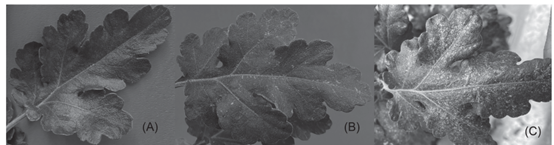
Thrips nigropilosus is the most economically important pest of chrysanthemum. To manage this species, there is a need for integrated pest management (IPM), including the use of natural enemies on chrysanthemums, as an environmentally friendly and sustainable method of pest control. We conducted the following investigations to develop a technique for utilizing indigenous natural enemies of this pest in chrysanthemum: (1) exploration of natural enemies of T. nigropilosus in chrysanthemum fields; (2) evaluation of the predation ability of a potential natural enemy, Campylomma livida, against T. nigropilosus; and (3) field trials to assess the effectiveness of augmentative release methods for C. livida. In terms of the identified natural enemies, Campylomma spp., Geocoris ochropterus, Orius spp., Haplothrips spp., and Ceranisus sp. were found in chrysanthemum fields, with C. livida being the most abundant. In the laboratory, we observed that an adult C. livida could feed on at least 9.0 adults and 9.9 larvae of T. nigropilosus in 24 h. Therefore, a field trial was conducted using C. livida to examine its effects on lowering the density of T. nigropilosus and reducing the damage it causes. Consequently, the number of plants damaged by thrips decreased to one-fifth in the biological control plot (C. livida released), compared with the findings in the conventional plot where pesticides were sprayed regularly or to the control plot where no pesticides were sprayed. Damage to chrysanthemum was also reduced to less than one-third in the biological control plot, providing evidence for C. livida’s effectiveness for managing thrips in chrysanthemum fields.
Download: OTHER FORMAT Links
Taiwan Agricultural Research
 ISSN: 2790-086X
Vol. 75, No.3 (2026)
ISSN: 2790-086X
Vol. 75, No.3 (2026)
 Submit your manuscript
 Guide for authors
- 1. Effects of Fertilizer Application Rates on the Growth and Functional Components of Chrysanthemum morifolium (‘Taiwan Hangju No. 1’)
- 2. Biological Functions, Antioxidant Properties, and Environmental Regulation of Plant Phenolic Compounds
- 3. Comparative Study of Asparagus Cultivars under Greenhouse Conditions