Current issue
Author:Sampat Ghosh、Sukjun Sun、Chuleui Jung*
Abstract:
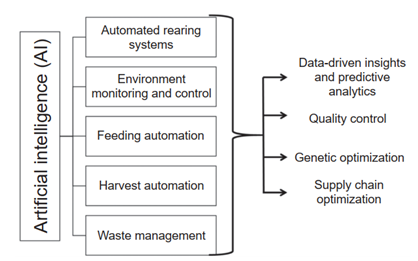
The edible insect industry in South Korea has evolved from its deep-rooted tradition of using insects such as silkworm pupae for food and medicine to a modern sector integrating advanced technologies and sustainability. Recent years have seen significant expansion, with approximately 245 operational insect farms producing species such as mealworms, crickets, silkworm pupae, black soldier fly larvae, and honeybee drones. Supported by regulatory frameworks like the Insect Industry Promotion Act (2011) and Hazard Analysis and Critical Control Point (HACCP) certification, the industry aims to address food security, rural development, and environmental concerns. Large-scale production facilities and AI-driven automation have increased efficiency, while global collaborations and export strategies have positioned South Korea as a leader in the global edible insect market. Nevertheless, scaling up production raises sustainability challenges, especially regarding energy use and carbon footprints. To maintain environmental benefits, strategies including renewable energy adoption, circular economy practices, and innovative processing are essential. Consumer acceptance is fostered by integrating insects into familiar food products and animal feed. Overall, South Korea’s edible insect sector represents a fusion of cultural heritage and cutting-edge technology, contributing to food security, sustainability, and health. The industry’s continued growth will depend on balancing large-scale production with environmental impact and meeting evolving consumer preferences. South Korea is well-positioned to shape the global edible insect market, driving innovation in sustainable protein production and securing a resilient future for global food systems.
Key words: Automation, AI, Circular economy, Sustainability, Food security
Download: OTHER FORMAT Links
Taiwan Agricultural Research
 ISSN: 2790-086X
Vol. 75, No.3 (2026)
ISSN: 2790-086X
Vol. 75, No.3 (2026)
 Submit your manuscript
 Guide for authors
- 1. Effects of Fertilizer Application Rates on the Growth and Functional Components of Chrysanthemum morifolium (‘Taiwan Hangju No. 1’)
- 2. Biological Functions, Antioxidant Properties, and Environmental Regulation of Plant Phenolic Compounds
- 3. Comparative Study of Asparagus Cultivars under Greenhouse Conditions