Current issue
Author:Cheng-Bin Li、Jau-Yueh Wang、Da-Gin Lin、Chin-Chih Chen、Ching-Yi Lin、Yuan-Kai Tu、Cheng-Ping Kuan、Ssu-Yu Lin*
Abstract:
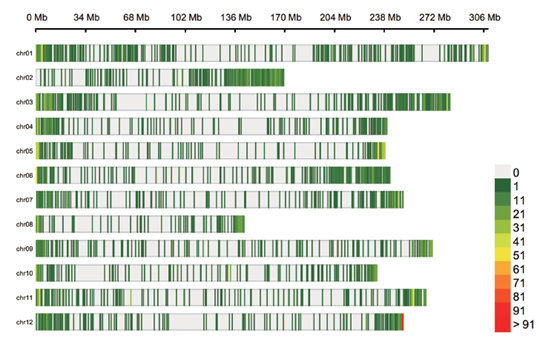
We developed a flexible core collection of pepper (Capsicum spp.) germplasm from the National Genebank of Taiwan and demonstrated its utility in screening for resistance to pepper mild mottle virus (PMMoV). A total of 1,011 accessions were sequenced, revealing four distinct genetic clusters associated with specific phenotypic traits. Population structure analysis confirmed the strong correspondence between genotypic and phenotypic variation, reflecting the association between population genetic structure and trait expression. Linkage disequilibrium (LD) decay analysis across major Capsicum species provided insights into population differentiation and informed singlenucleotide polymorphism (SNP) density requirements for breeding applications. A two-phase core collection strategy was then implemented to balance genetic diversity, representativeness, and experimental feasibility. In the first phase, 250 accessions were selected to enable large-scale studies such as genome-wide association studies (GWAS). This set was further refined in the second phase to 50 accessions, retaining 89.4% of allele coverage. Preliminary application of the core collection to PMMoV resistance screening identified three candidate accessions- Pcc2, Pcc55, and Pcc167- with potential resistance. Overall, this work establishes a genetic structure-informed core collection framework that enhances germplasm utilization, accelerates early-stage resistance evaluation, and provides a foundation for future genomic and breeding research in pepper.
Key words:Pepper, Genetic diversity, Core collection, Pepper mild mottle virus (PMMoV)
Download: OTHER FORMAT Links
Taiwan Agricultural Research
 ISSN: 2790-086X
Vol. 75, No.3 (2026)
ISSN: 2790-086X
Vol. 75, No.3 (2026)
 Submit your manuscript
 Guide for authors
- 1. Effects of Fertilizer Application Rates on the Growth and Functional Components of Chrysanthemum morifolium (‘Taiwan Hangju No. 1’)
- 2. Biological Functions, Antioxidant Properties, and Environmental Regulation of Plant Phenolic Compounds
- 3. Comparative Study of Asparagus Cultivars under Greenhouse Conditions