Current issue
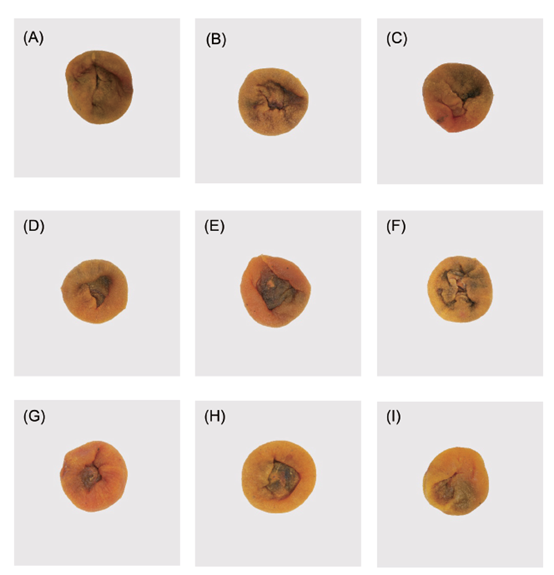
Author:Shu-Chin Lo*
Abstract:
Browning severely impairs the sensory quality and marketability of dried persimmon. Effective browning control remains a key technological challenge in processing. This study systematically assessed the impact of anti-browning agents, drying methods, and packaging materials on product quality to develop an industrially feasible dried persimmon processing strategy. Fresh persimmons were immersed for 5 min in 0.1–1.0% solution of citric acid, sodium ascorbate, or sodium metabisulfite, then dried by hot-air, low-humidity, or vacuum drying until the water activity reached 0.65. The dried products were subsequently packaged using five different packaging materials to evaluate storage stability. Sodium metabisulfite proved the strongest anti-browning effect, with lightness (L*) reaching 70.7; it provided optimal color retention and sensory acceptance at 0.5%, while at 1.0% it induced sulfur off-flavors. No detectable sulfur dioxide residues remained in the final products. Citric acid and sodium ascorbate exhibited limited efficacy; citric acid further reduced sensory acceptance due to sour taste. Drying method significantly affected quality. Low-humidity drying produced dried persimmon with superior overall attributes, including better color retention (L* = 66.8), moderate hardness (5.0 kg cm-2), and the highest sensory score (8.4). Vacuum drying enhanced color retention (L* = 68.0) but caused excessive hardness (12.7 kg cm-2), deviating from the desirable soft and chewy texture and lowering consumer preference. For storage, aluminum trioxide bags and double-sided aluminum foil zipper bags best maintain color (L* = 68.0–69.0) and sensory quality (scores = 6.5–6.7) for over 30 d at room temperature. Aluminum trioxide packaging provided excellent barrier properties for product visibility. The combination of 0.5% sodium metabisulfite treatment, low-humidity drying, and high-barrier packaging (preferably aluminum trioxide) offers a scientifically grounded, practical, and regulatory-compliant strategy to control browning while preserving safety, sensory quality, and market appeal in both small-scale and industrial dried persimmon.
Key words:Dried persimmon, Anti-browning agents, Sodium metabisulfite
Download: OTHER FORMAT Links
Taiwan Agricultural Research
 ISSN: 2790-086X
Vol. 75, No.3 (2026)
ISSN: 2790-086X
Vol. 75, No.3 (2026)
 Submit your manuscript
 Guide for authors
- 1. Effects of Fertilizer Application Rates on the Growth and Functional Components of Chrysanthemum morifolium (‘Taiwan Hangju No. 1’)
- 2. Biological Functions, Antioxidant Properties, and Environmental Regulation of Plant Phenolic Compounds
- 3. Comparative Study of Asparagus Cultivars under Greenhouse Conditions