All issues
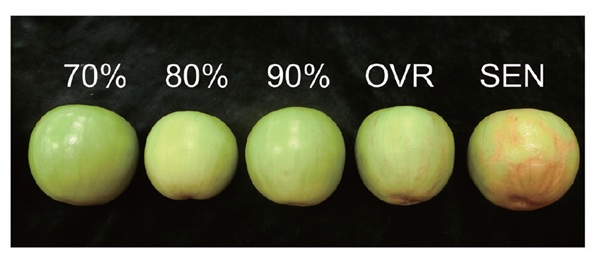
Author:Tzu-Huan Hung, Chia-Hua Chang, Chiu-Hua Chen, Su-Yi Chen, Min-Chi Hsu, and Jhan-Hong Guo*
Abstract:
This study investigated the effects of cultivation method (organic vs. conventional) and orchard-level variation on the functional quality of Indian jujube (Ziziphus mauritiana) fruits. A total of 64 fruit samples were collected from four orchards in Taiwan- two organic and two conventionaland analyzed for their antioxidant capacity, total phenolic content, total flavonoid content, and vitamin C content. Although organically grown fruits exhibited slightly higher mean levels of antioxidant capacity, phenolic compounds, and flavonoid compounds, linear mixed-effects models indicated that the cultivation method had no statistically significant effect on any functional indicators. In contrast, orchard-level random effects accounted for a substantial proportion of the total variance, particularly for antioxidant capacity, total flavonoids, and vitamin C. Notable differences were observed between orchards within the same cultivation method, suggesting that localized environmental or management conditions may play a stronger role than cultivation system alone in shaping fruit phytochemical profiles. Measured soil nutrient profiles revealed significant differences among orchards, providing plausible explanatory cues for observed phytochemical variation. Pearson correlation analysis further revealed that antioxidant capacity was strongly associated with total phenolic and flavonoid content. In contrast, vitamin C showed no significant correlations with other traits, indicating that phenolic and flavonoid compounds are likely the primary contributors to antioxidant potential in Indian jujube fruits.
Key words:Indian jujube, Functional quality, Cultivation method, Orchard-level variation, Linear mixed-effects model.
Download: PDF Links
Taiwan Agricultural Research
 ISSN: 2790-086X
Vol. 74, No.4 (2025)
ISSN: 2790-086X
Vol. 74, No.4 (2025)
 Submit your manuscript
 Guide for authors
- 1. Bacteria in Insect Pest Management in Agriculture: The Past, Present, and Future
- 2. Multiple Applications of Yellow Mealworm (Tenebrio molitor L.) Reared on Plant-Based Substrates: Circular Agriculture, Farmed Animal Feed, and Other High-Value Products
- 3. Mini-Review on Microbial Pesticide Research for Crop Protection Assisted by Generative AI